In-depth Market Analysis of the Hosiery Knitting Machine Industry 2026: Global Hosiery Scale, Trends, and Future Outlook
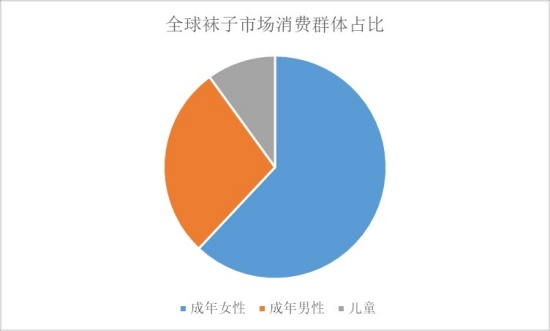
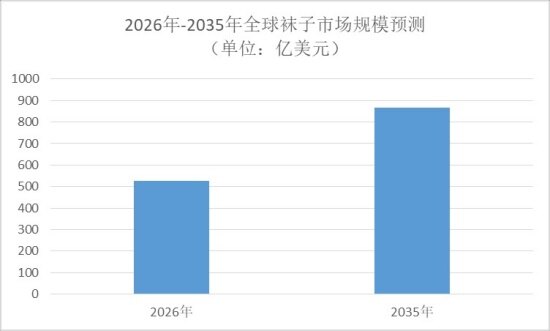
According to China Report Hall, the global hosiery market stands at a new historical starting point after years of steady development. By 2026, the global socks market is projected to reach a valuation of approximately $52.76 billion, supported by an annual global production exceeding 90 billion pairs. Socks have evolved from mere warmth necessities into daily consumer goods integrating fashion expression, sports technology, and sustainability. Currently, the global hosiery market presents a diversified segment structure: in terms of material, cotton socks dominate with a 54% sales share, while synthetic blend socks hold a 38% share due to their performance advantages. From a consumer perspective, adult women are the primary consumption force, accounting for over 62% of demand. Driven by the ongoing popularity of athleisure, rising health consciousness, and advancements in production technology, the socks industry is entering a new growth cycle. The global market value is expected to climb to $86.79 billion by 2035, with a compound annual growth rate (CAGR) of 4.9% from 2026 to 2035.
I. Core Drivers of Market Growth and Demand Transformation
Modern consumer demand for socks now extends far beyond the basic function of "foot covering," injecting strong growth momentum into the market. Firstly, daily wear remains the foundation, with about 68% of global consumers viewing socks as a daily necessity, with an average annual per capita consumption of 12-15 pairs. Secondly, the rise of the athleisure trend has profoundly changed sock attributes; over 52% of consumers have increased purchases of specialized sports socks due to fitness activities, making sports socks account for 48% of global sock consumption. Particularly in the US market, sports socks constitute 48% of the country's total sock sales. Furthermore, the spread of health awareness has driven demand for functional socks, with a 38% increase in the use of compression socks among consumers aged 30-55, and their penetration continues to grow in medical and sports settings. The consumer pursuit of comfort and functionality is pushing brands to incorporate more technological elements into sock design, such as moisture-wicking, antimicrobial treatment, and temperature regulation. These functional socks are becoming a new engine for market growth.
II. Product Type Segmentation and Technological Innovation Trends
The internal structure of the socks market is rich, with different categories meeting diverse scenario needs. By type, no-show/low-cut socks hold the largest share at 54%, of which sports no-show socks account for 48% of this category, and over a quarter feature reinforced heel and toe designs for enhanced durability. Ankle socks constitute 19% of the total, with their design closely linked to sports; over half the demand comes from sports activities, while innovations like low-profile invisible designs are also popular. Tights/pantyhose and stockings together form a significant segment of the women's hosiery market, holding shares of 14% and 21% respectively, driven by fashion and material innovation (e.g., microfiber, eco-friendly blends).
Notably, technological innovation is reshaping product boundaries. The adoption rate of seamless knitting technology in global production facilities has reached 41%, improving sock durability by 22%. Concurrently, sustainability has become a core focus in product development, with about 46% of newly launched sock collections utilizing sustainable or recycled materials, leading to a 30% increase in the use of recycled polyester fiber. Socks with antimicrobial treatment, smart socks with temperature regulation, and bamboo fiber blend socks all show strong growth potential in their respective segments, reflecting rising consumer demand for combined functionality, environmental friendliness, and comfort.
III. Global Regional Market Landscape and Consumption Differences
Globally, sock production and consumption show distinct geographical divisions and characteristics. The Asia-Pacific region is a major production hub, accounting for 37% of global output, and also a significant consumption market with a 29% share. China and India are the dual engines driving regional growth, supported by vast domestic markets and export-oriented manufacturing. Europe is one of the largest consumption markets, holding a 28% share, with consumers showing high acceptance of sustainable socks (41% of fiber use has shifted to sustainable sources) and a strong preference for fashion design, where patterned tights and other stylized products are popular.
The North American market (primarily the US) contributes about 18% of global sales, characterized by high consumption frequency and diverse channels. US consumers purchase over 12 billion pairs annually, with nearly one-third bought online, while discount retailers occupy nearly half of offline distribution points. The Middle East and Africa, as emerging markets, hold an 11% share with significant growth potential, marked by a young population and high import dependence. The varying consumption habits, channel structures, and value propositions across regions create a complex and dynamic global socks market.
IV. Industry Competitive Landscape and Leading Player Dynamics
The global socks market is intensely competitive and fragmented. The top five manufacturers collectively control only about 24% of the market share, with the remainder divided among numerous brands, private-label manufacturers, and contract producers. Private labels constitute a significant 36% of global sock sales, exerting continuous pricing pressure on traditional brands. In terms of channels, although offline retail (especially discount stores and supermarkets) still dominates (71%), the e-commerce channel (29%) is growing rapidly. Direct-to-consumer online brands, in particular, have expanded by 31% in recent years, and sock subscription services have emerged, accounting for 12% of online sales.
The brand landscape includes traditional giants like Gildan and Hanesbrands, which lead through scale and extensive distribution networks (Gildan holds about 9% of global sales share, Hanesbrands about 7%); sports brands like Nike and Adidas, which lead the high-performance sock market through technological marketing; and emerging direct-to-consumer brands like Bombas and Stance, which build loyalty through social missions, unique design, and lifetime warranties. In recent years, major companies have increased their focus on sustainability, such as committing to 100% recycled polyester and investing in automated production for efficiency, which has become a new competitive focus.
V. Future Outlook and Key Development Summary
China Report Hall's "2025-2030 In-Depth Research and Investment Feasibility Analysis Report on China's Sock Industry Market" points out that looking ahead to 2035, the global sock market will continue to expand, driven by the dual engines of technological innovation and sustainability. On one hand, automation and intelligence will profoundly transform the production end, with over 39% of knitting factories having already invested in automated equipment. The application of AI demand forecasting systems and RFID technology is enhancing supply chain efficiency. On the other hand, product innovation will increasingly focus on segmented needs. From graded-pressure medical compression socks to sensor-integrated smart socks, and more size-inclusive designs, the variety of sock categories will continue to diversify. Simultaneously, sustainability will shift from a "nice-to-have" to a "must-have." Whether it's the application of recycled materials, the promotion of biodegradable packaging, or the advancement of water-saving dyeing processes, all are set to become industry standards.
In summary, the global socks market in 2026 is a large-scale, diverse, and dynamic mature market. Its growth is driven not by a single factor, but by a combination of daily essential demand, the athleisure trend, rising health awareness, technological innovation, and sustainable development concepts. Starting from a $52.76 billion market base and moving towards an $86.79 billion future by 2035, the development trajectory of the socks industry clearly shows that this seemingly ordinary apparel category is gaining new vitality through continuous integration with technology, fashion, and environmental concepts. For industry participants, understanding regional market differences, grasping product segmentation trends, embracing technological change, and committing to sustainability will be key to winning future competition.
Cited from China Report Hall https://www.chinabgao.com
图片展示